
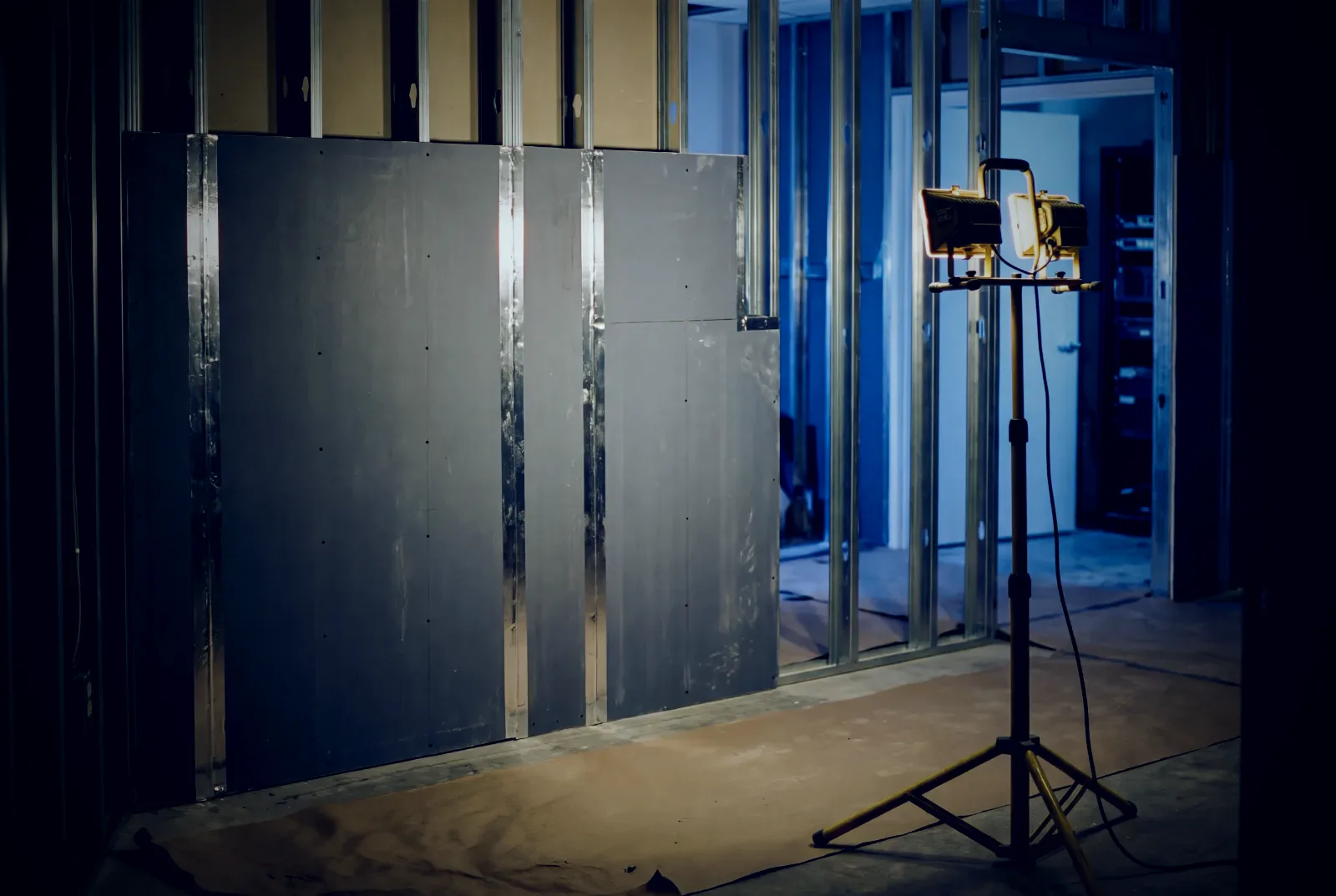
A shielding assessment considers the planned x-ray equipment, beam directions, workload, source geometry, nearby occupied spaces, and facility design goals. Barriers can be primary (intercepting the useful beam) or secondary (principally scatter and leakage radiation), depending on the application.
The design must consider walls, doors, viewing windows, penetrations, and changes in adjacent room use. Material selection, lead-equivalent claims, construction details, and verification methods should be documented.
National Council on Radiation Protection and Measurements Report 147 is a foundational technical source for medical x-ray imaging shielding design. A report-based calculation is not a substitute for site-specific engineering, current regulatory review, or a qualified assessment.